

When did rape become a bad word? Obviously, rape is a bad thing, but why all of a sudden are words pertaining to rape, sexual assault, and violence against women being bleeped out in the same way as an f-bomb? People don’t want to talk about these types of issues, but now Big Tech has found a way to increase the taboo around sexual abuse by deplatforming, demonetizing, and generally censoring any type of discussion around the topic. Censorship of discussion concerning rape and violence against women online has now become another means to silence victims. Then after silencing victims, politicians like AC Cordoza are making decisions that further impose on women who may have to suffer the consequences of rape related pregnancies. AC Cordoza voted for HB212, which would require mandatory counseling for abortion, potentially forcing a sexual assault victim to have to justify her decision to end a rape related pregnancy to a committee of medical professionals. In contrast, Dr. Jarris Taylor who is running for delegate in the 86th district trusts women to exercise sovereignty over their own bodies.

In contrast, Dr. Jarris Taylor who is running for delegate in the 86th district trusts women to exercise sovereignty over their own bodies.
“Abortion is on the ballot, and we have to make sure that Virginia remains a safe haven for reproductive healthcare in the South. Politicians should have no place to stand between a woman and her doctor.”
Dr. Jarris Taylor, Candidate for Delegate in the 86th District
Censorship of sexual assault occurs constantly in the way people deem hearing about it as the incorrect time. Society remains blissfully ignorant to the silent suffering of many women by making sure that speaking out against sexual assault is never the right time. The assertion that there is a time and a place for everything is a form of censorship. In reality, the phrase “there is a time and a place for everything,” is a polite way to translate what people really mean, “I don’t want to hear it.” Although sexual assault is extremely common, impacting 1 in 4 women, talking about violence against women is considered inappropriate, even if it directly affects a woman someone knows personally.
Rather than deeming the topic too upsetting to hear, talk of sexual assault and violence against women needs to be discussed in regular social situations. Talking about sexual assault should NOT be censored online. Words like rape, sexual assault, or abuse should NOT be bleeped out like expletives. Big Tech censorship of violence against women goes beyond bleeping ‘trigger words’. It includes deplatforming and demonetizing anyone who discusses these issues openly. The censorship also extends to the creation of content.
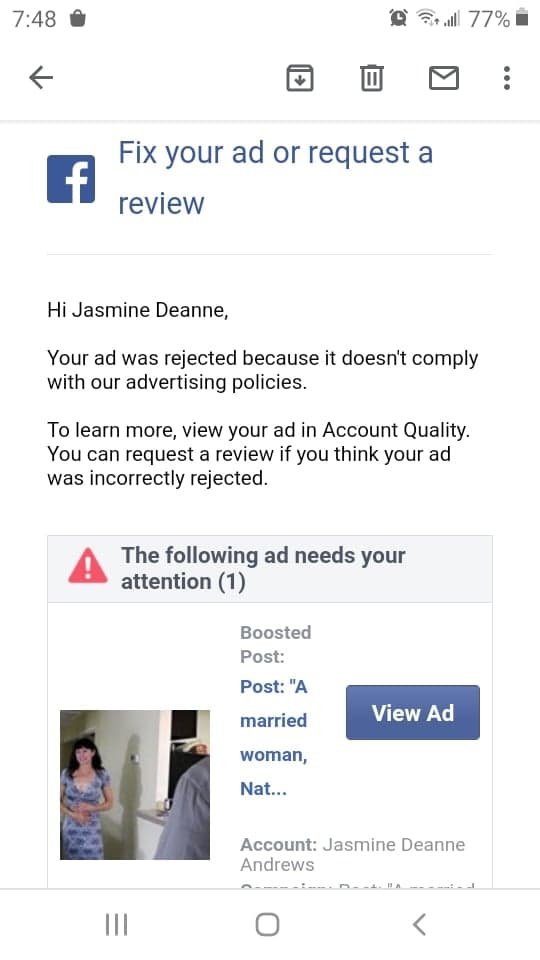
In the preproduction phase of the independent film, Natalie’s Abortion-which shares the story of a sexual assault survivor-the production was denied insurance coverage by Entertainment Sport Promotion (ESP) because the film involved a rape scene. Without event insurance, the film production was unable to secure film locations or protect the people involved in filming from liabilities. Essentially the refusal to insure the film, because of the rape scene was a way to censor and halt the entire production of Natalie’s Abortion before it began.
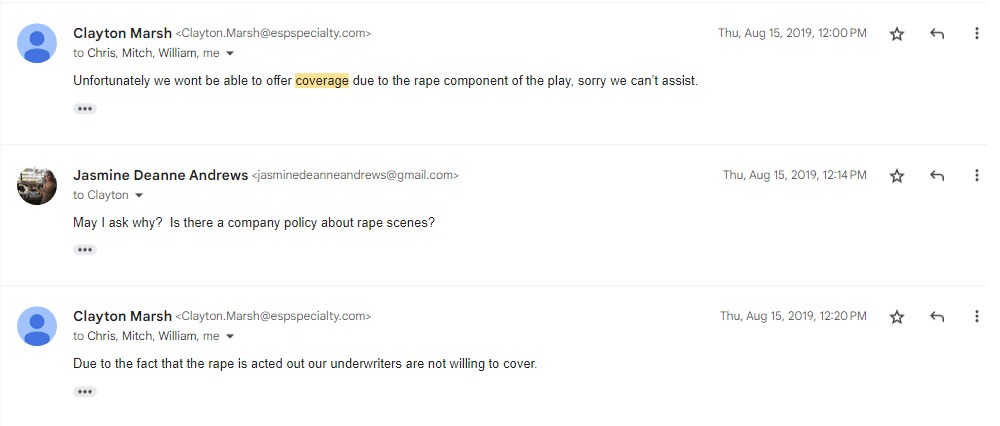
The insurance company asserted that they would not cover a rape scene since it would be acted out directly. However, the sexual violence women have experienced at the hands of predatory men is never implied but something woman have experienced graphically. The purpose of showing the graphic nature of the crime to audiences is to confront the reality of rape. Society can be quick to offer unsolicited opinions concerning rape, unwanted pregnancy, and abortion, but at the same time are unwilling to face the horrific nature of sexual assault. This willful blind-eye to the graphic nature of sex crimes then translates to the decision-making process of politicians regarding the reproductive rights of women. In order to continue with the production of Natalie’s Abortion, the company was able to find a different insurance provider. However, the censorship of the film did not stop.
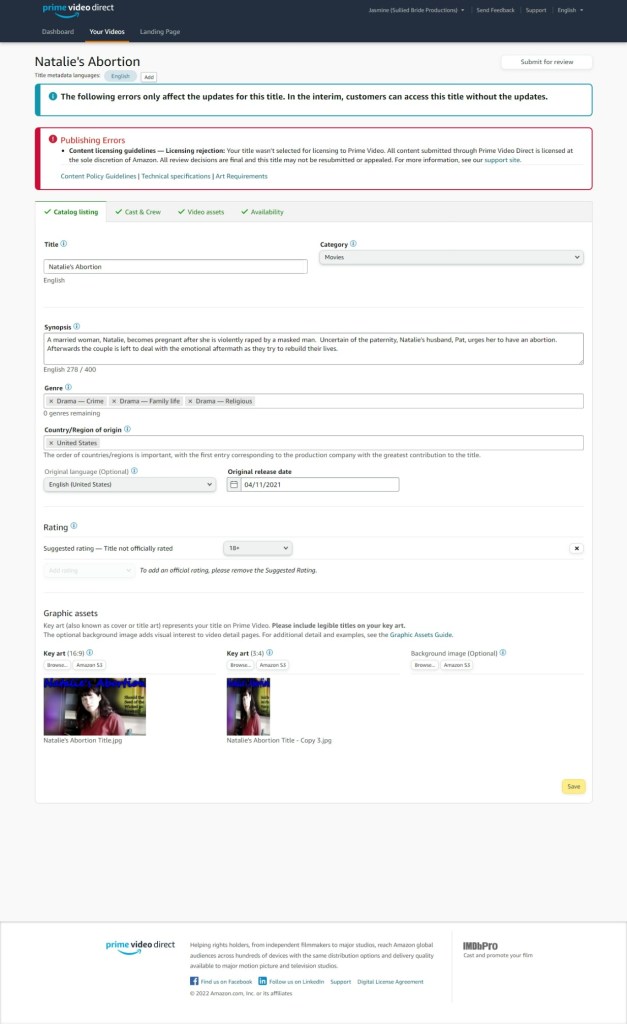
After completion of the film, Natalie’s Abortion faced more censorship from Big Tech when Amazon deemed the film as having inappropriate content and removed the film from its streaming service. Amazon used the vague terminology “offensive content.” When asked what specifically qualified as “offensive content” Amazon offered no clear answers. Reviewing the content of Amazon Prime’s catalog, the streaming service features movies which contain full frontal nudity and extended rape scenes. In the film, The Girl with the Dragon Tattoo there is an extended rape scene, which graphically details a woman chained to a bed and being violated, compared to Natalie’s Abortion where the rape scene only lasts a few seconds with a brief flash of implied nudity.
Although Amazon Prime is a private company, since it is operating in the public commercial domain for sales, all of its actions are still governed by Federal Law which protects First Amendment Free Speech violations. Deeming the content of Natalie’s Abortion as offensive compared to much more graphic film content indicates politically motivated censorship on the part of Amazon. Amazon stonewalled when its policy of “offensive content” was challenged. Amazon used the size of their company to crush Natalie’s Abortion just as it was beginning to generate a large audience, censoring Constitutional Free Speech.
Representatives are elected to official positions to protect citizens from having their rights striped away by large companies. The House of Delegates represents the districts for legislative purposes, and serve as liaisons between business owners within the Commonwealth and larger conglomerates, such as Big Tech. As elected officials, Delegates have the authority to mediate between companies like Amazon and the common people concerning topics such as censorship. However, challenging Big Tech censorship cannot be fulfilled when Delegates like AC Cordoza only uses his position to impose legislation to police the bodies of women. Not only does Dr. Jarris Taylor support the reproductive rights of women, but he will not the censor the voices of victims.

“Abortion is on the ballot, and we have to make sure that Virginia remains a safe haven for reproductive healthcare in the South. Politicians should have no place to stand between a woman and her doctor,” Dr. Jarris Taylor, Candidate for Delegate in the 86th District.
https://tubitv.com/movies/100002239/natalie-s-abortion?start=true
The Virginia Black Film Festival (VBFF) an Interview with Bryan G. Thompson
I had the pleasure of interviewing Bryan G. Thompson, the event coordinator for the groundbreaking Virginia Black Film Festival. The Virginia Black Film Festival featured international and domestic filmmakers across all genres of film. In attendance at the event was April Woodard the host of the Coast Live, Mayor Donnie Tuck, Representative Bobby Scott, renowned…
How a DMV Independent Filmmaker got his Film into the Oscars
June Daguiso embarked on his journey as a filmmaker over eighteen years ago and never expected that one day he’d receive three film nominations at the Oscars. Currently, his film Saving Ana, has been nominated for Best Original Song, Best Picture, and Best Actor. When he began making films his goal had never been to…
Break Out Star of Then Sings My Soul – ArLynn Parker
Then Sings My Soul will Premiere on Sunday, May 21, 2023 at the Fort Monroe Theater in Hampton. Doors open at 2:00pm and the Film Begins at 3:00pm. Tickets are available on Eventbrite for $10.50 https://www.eventbrite.com/e/then-sings-my-soul-premiere-tickets-565532802837 https://www.facebook.com/sulliedbride/videos/208585361709355

 Sullied Bride Speaks
Leave a comment